
The A to Z of the Energy Transition: Q is for Queues for the Grid
Grid connection queues - a key bottleneck in the energy transition
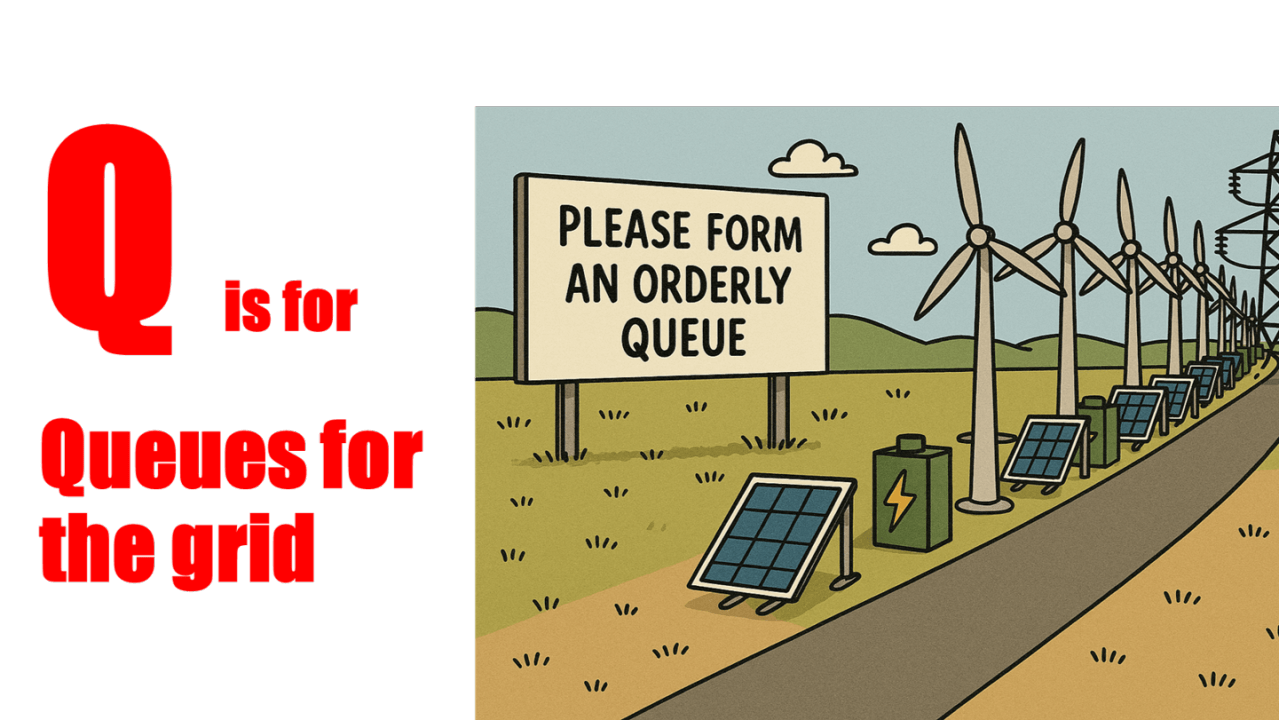
The British are famous for queuing (or lining up as my friends in North America prefer to say). It's oft joked that Brits will join a queue just for fun, but the queue for connections to the grid is far from a joke.
As the global energy transition accelerates, one of the most significant and underappreciated challenges is the growing queue for grid connections. This issue is particularly acute in the UK, where the backlog has reached critical levels, but it is also a growing concern across Europe and other regions around the world - driven by both renewable project development but also increasing demand from things like data centres, housing developments, and EV charging sites.
There is also a structural issue with the design of the grid. Historically, we had a very centralised system with relatively few but large generating sites - nuclear, coal and gas plants. Typically these were located near demand-centres, such as major cities and in the case of nuclear, along the coastline to access abundant cooling water. Renewable projects have largely been developed where the wind and sun is most abundant and where there is space. This often is not close to where the demand is.
Globally the grid connection queue is estimated at around 3000 GW (3,000 GW in limbo as the grid struggles to keep up - Transformers Magazine). Investment in grid and associated infrastructure is at record highs. Energy data analytics firm Rystad Energy estimates the between 2024-30 over $3tn of investment is required globally. National Grid alone expects to invest £60bn in the UK and US by 2030.
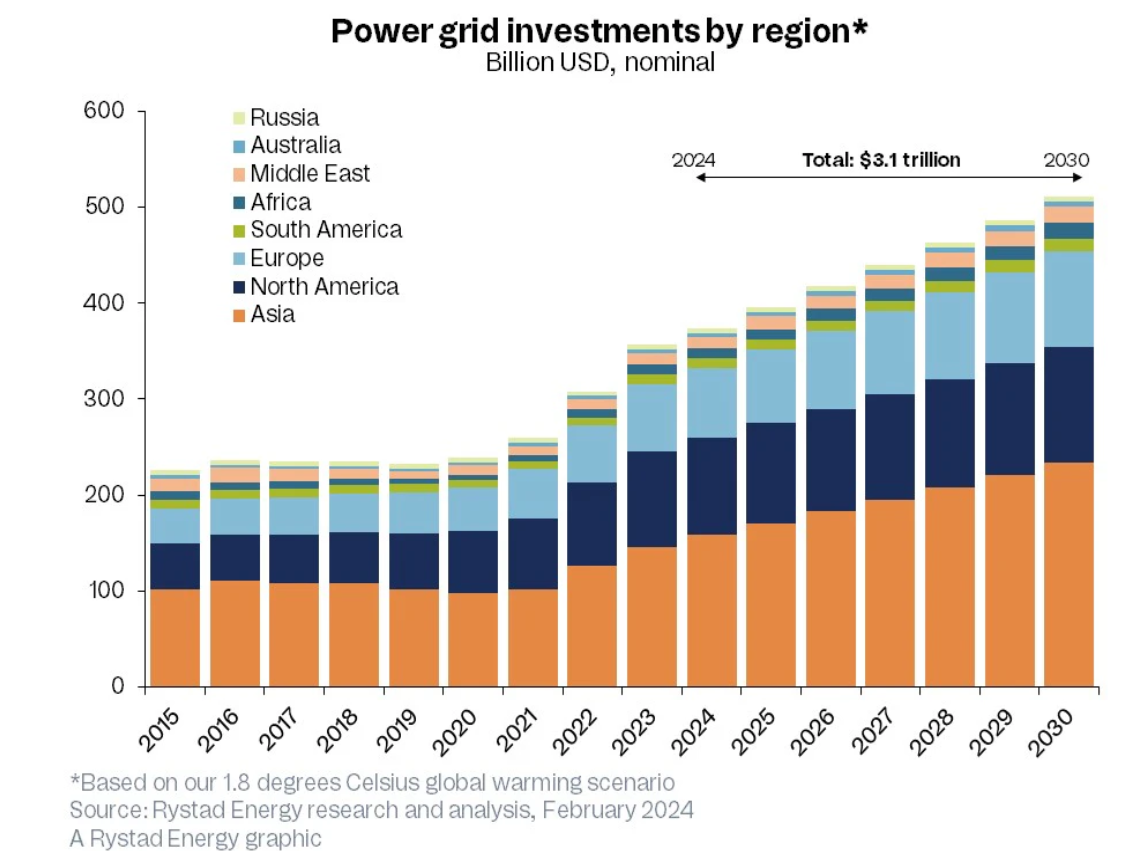
Forecast global investment in grid - Source: Rystad Energy
This level of investment is causing its own challenges. Around the world there are increasing delays in procuring transformers, cables and other key equipment. The world's largest transformer manufacturer, Hitachi Energy, recently described that the industry was "overwhelmed" and unable to meet "exploding" demand. And even if we have the right kit, we'll also need the right people to install it. The Climate Change Committee recently estimated that up to 725,000 new jobs could be created in the UK's low-carbon sectors by 2030 - many of which will be associated with grid infrastructure. This creates a fabulous opportunity for exciting skilled jobs, but unless these roles can be filled we will face further delays to key infrastructure.
UK gridlock
In the UK, the grid connection queue recently reached 765 GW—more than three times the capacity needed to meet the government’s Clean Power 2030 targets. This figure is far higher than is ever likely to be constructed. Historically, the system operated on a “first come, first served” basis, which allowed speculative and unviable projects to join and clog the queue, for a relatively very small fee, delaying progress for better projects more likely to proceed. Some projects faced wait times of up to 15 years, with connection dates well into the 2030s.
Recognising this challenge, the National Energy System Operator (NESO), in collaboration with Ofgem , launched the Transition to Connections Reform in April 2025. This reform replaces the old model with a merit-based “Gate 2 to Whole Queue” process. Projects are now assessed based on their readiness and strategic alignment with national energy goals. Projects meeting the Gate 2 criteria receive confirmed connection dates and queue positions, while others are relegated to Gate 1, receiving only indicative offers.
According to NESO these reforms are expected to cut the queue by 64%, prioritising 42 GW of clean energy projects and unlocking £40 billion in annual investment. This includes fast-tracking connections for wind, solar, battery storage, and industrial demand-side projects such as datacentres and manufacturing facilities.
Europe’s Parallel Struggles
The UK’s grid challenges are mirrored across Europe. According to Eurelectric’s April 2025 report, connection queues are jamming distribution networks, delaying solar farms and EV charging hubs until 2030 in some regions. Eurelectric has called for a shift from passive to proactive queue management, blending digital innovation, flexible solutions, and aligned policies. Their blueprint, “From Backlog to Breakthrough,” emphasises the need for smarter planning and faster permitting to declutter Europe’s networks
Digital and AI part of the solution?
Beyond lot of new kit, cable and workers, what other solutions are there? There's a lot of talk at the moment on how much electricity demand is being created by data centres and AI. What is talked about less is the role that digital technologies, including AI, can play in solving some of these challenges.
Advanced conductors, reconductoring techniques, and AI-driven grid management can increase capacity without building new infrastructure. NESO’s Network Opportunity Map, for instance, provides real-time data on “Connected Headroom,” helping developers identify viable connection points.
Digital twin models and predictive analytics are also being deployed to simulate grid behaviour and optimise connection strategies. These tools can reduce costs, improve reliability, and accelerate deployment—especially for distributed energy resources like rooftop solar and batteries. I wrote more on this under D is for Digitalisation
Conclusion: From gridlock to grid growth
Queues for grid connections are more than a technical issue—they are a key test for the energy transition’s success. In the UK, reforms are beginning to clear the backlog, prioritising readiness and strategic value. Across Europe and the globe, similar efforts are underway, but progress is uneven.
To unlock the full potential of clean energy, governments, regulators, developers, and communities must work together to reform grid access, invest in infrastructure, and embrace innovation. Only then can we move from gridlock to grid growth.
Further reading:
As always, further reading from the Energy Institute New Energy World magazine, with thanks to Will Dalrymple:
Industry praises UK government plans for electricity system change proposals
Responsible grid management could unlock UK renewable energy potential
