
The A to Z of the Energy Transition: Y is for Young Energy Leaders
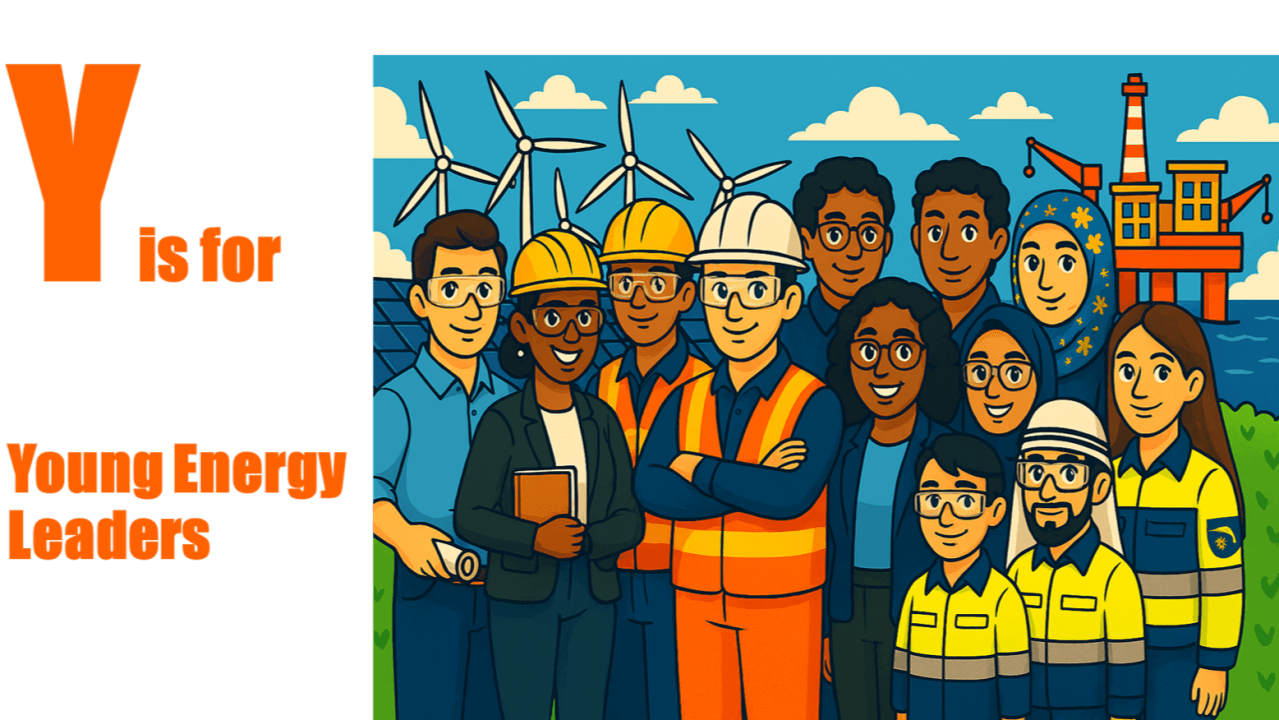
I'm delighted to have another guest writer for this edition.
Marta Oliveira is currently a Board member and the Global Chair of the Young Professionals Network (YPN) at the Energy Institute (EI). She actively promotes international collaboration between Energy Institute communities and other key young professionals organizations to empower future energy leaders in the net-zero transition. Marta also contributes to the EI Generation 2050 initiative, which fosters intergenerational handshakes among energy professionals and supports a diverse workforce driving the sector forward. She has been involved in the EI for more than 3 years, including a previous role as Chair of EI YPN London & Home Counties branch. As part of this role, Marta successfully led the delivery of the 2023/2024 events season in relevant energy topics and with an audience of 100+ YPs each, including The Role of Carbon Markets to Deliver Net-Zero event at IEW 2024.

Guest writer: Marta Oliveira, Global Chair of the Energy Institute Young Professionals Network
Additionally, Marta is senior associate at Ikigai Group with experience in strategic advice and co-development of renewable energy and natural capital systems with large infrastructure asset owners and project bankability structuring for institutional investors. Marta has been specialising in the sustainable fuels value chain delivery, including the development of a first-of-its kind multi-modal hydrogen hub at an UK airport. Marta also focuses on Co2 asset optimisation, including integration of BECCS and nature-based solutions (carbon removals, biodiversity and water neutrality). Prior to joining Ikigai in 2021, Marta worked in European bioenergy market intelligence and policy, specifically supporting the EU Commission on legislation regarding the scale-up of bioenergy technologies and crowd-in of associated sustainable investment (including EU Taxonomy). Marta is also a guest lecturer at the UN Renewable Energy Institute, teaching the courses on Carbon Finance and Carbon Capture & Market Strategies.
Over to you, Marta...
Young Energy Leaders: empowering the next generation to drive the energy transition
Marta Oliveira AMEI, Energy Institute YPN Global Chair
As new technologies, new markets, and new solutions reshape the energy system, one trend is becoming increasingly clear: young professionals are not just future leaders; they are essential to today’s decision-making.
I reiterate all points throughout this article but to assure you I’m not the only one the Energy Institute #Generation2050: 25 Years Out report - built from the insights of a thousand young professionals across the globe – makes them all abundantly clear. The message is unequivocal: young people are choosing the energy sector for purpose-driven careers, they are ready to contribute more, and they are asking for the tools and forums to lead effectively.
1. What’s attracting young professionals to the energy sector? Purpose, impact, and urgency
Today’s young professionals are motivated by mission-driven work. Besides being part of the team, the energy transition can bring forward (probably more) stimuli than TikTok. It drives careers that have a palpable impact in tomorrow’s lives and a scary downside of not getting climate change on the right path.
From renewables to sustainable fuels, digitalising infrastructure to rethinking markets, the energy sector offers an unparalleled opportunity to deliver meaningful global impact. And the message from Generation 2050 is clear: we’re ready to step up and help get the transition on track.
2. Why give young professionals greater agency: a shift in knowledge dynamics
With the explosion of AI, new technologies, innovative market structures, emerging start-ups, young professionals became knowledge catalysts. Expertise is now being passed top-down and bottom-up and is re-shaping how organisations approach challenges.
Because of this, intergenerational decision-making forums became essential for organisations to gain (i) early understanding of emerging technologies, (ii) diverse thinking on market transformation, (iii) stronger alignment with societal expectations and (iv) improved organisational agility.
One of the strongest messages from the Generation 2050: 25 years out report is the call to champion reverse mentorship. The Energy Institute is already pioneering it by hosting intergenerational “handshakes” within its network:
International Energy Week (IEW) 2025: hosted the POWERful Women and Energy Institute Young Professionals Network London Branch handshake event, where young energy shapers had the chance to meet with women leaders in the energy sector.
Energy Institute Aberdeen, Highlands & Islands Young Professionals Network: successfully ran a handshake event at their annual dinner in May, including the participation of Dr Nick Wayth CEng FEI FIMechE and EI President Andy Brown OBE, encouraging intergenerational collaboration for the transition in a region where this brings structural changes to the community and local careers.
Handshake webinar on COP30 perspectives: delivered with Student Energy and featuring EI Fellow Ieda Gomes Yell, MSc, FEI, MIoD and a long-standing EI emerging leader Guilherme Castro. From students to top-of-the-chain, this allowed a rounded discussion on how to tailor the global energy goals towards regional realities.
National Grid handshake event (yesterday!): led by EI fellow and Council member Cordi O'Hara OBE FEI, this event showed the way to future handshake sessions to be hosted by other EI fellows.
- Energy Institute committee boards: most include young professionals, for example Nicole Payne and Joseph Goulding have been contributing to targeted inclusion of young professionals at International Energy Week and raising respective relevant topics for the agenda.
But this is only valid if we “make inclusion structural, not symbolic”. These intergenerational forums are most powerful when they move from “side events” to core conference programming and young professionals take part in real discussions.
Now, we can all acknowledge that with greater agency comes with responsibility. Technical knowledge opens the door, but becoming a well-rounded energy leader requires more: stakeholder management, pragmatism, and the ability to navigate geopolitical and economic complexity. Especially in today’s landscape, guiding young professionals to build up these skills is essential for achieving a fair and affordable transition.
3. How to empower emerging leaders: skills and global collaboration
Leadership skills and real-world experience
Young professionals want opportunities not only to learn but to apply these skills in practice – also highlighted in the Generation 2050: 25 years out report as a clear need. This shows up in two ways:
1. Earlier leadership responsibilities. Many young professionals are taking on management or technical leadership roles sooner. Beyond technical expertise, they need support with decision-making, communication, team dynamics, and cross-cultural collaboration. The EI Academy plays an important role by pairing technical training with leadership and soft-skills development.
2. Broader exposure beyond narrow corporate roles. Some young professionals feel limited by rigid organisational structures, unsure how to explore different parts of the sector or find where they can make the most impact. Early-career schemes (for examples apprenticeships and internships) are a good help at the start. Later in careers, the focus changes to find opportunities to connect with peers and test ideas. This is where Young Professional Networks (YPNs) become particularly valuable - offering a practical and independent space to grow.
The power of global network of regional young professional communities
Energy Institute YPN communities act as local hubs for emerging leaders. Run by and delivering for young professionals, they put together panel discussions, skills workshops, networking events, and community activities - connecting early-career professionals with peers and experts in their region.
YPN communities are active today across the UK, Ireland, Hong Kong, Malaysia, Nigeria, and Singapore, with more developing.
YPN's impact is amplified by sitting under the global @Energy Institute umbrella, which connects all regional groups into a single international community. This global link matters: the transition is shaped by cross-border supply chains, technology trends, and policy shifts. A global network helps us make sense of these dynamics and strengthen local leadership with international perspective.
Cross-border collaboration in action
Here are recent examples of how collaboration across EI’s global YPN network is already shaping the sector:
Generation2050: 25 Years Out report: its author team - Karolina Zieba, Aine Murray, Nicolas Manea, Lisa Pardini and AbdulHameed Raji, CEng MEI MIET - all volunteers from different YPNs, worked across time zones and with young and senior professionals across the globe to produce a report grounded in diverse perspectives and lived experience which is now a valuable tool for organisations investing in its workforce.
Regional joint webinars: YPN Malaysia and YPN Hong Kong held a joint session on hydrogen and solar-hydrogen solutions for Southeast Asia, strengthening regional technical knowledge-sharing.
First Generation2050 Global Communities Meetup at International Energy Week 2025: earlier this year, YPN leaders from multiple regions (including myself!) met in person for the first time. Some spoke on expert panels, we also had the chance to build on global YPN partnerships and take part dedicated handshake events. Was given the opportunity to host an evening reception (with the exceptional team at YPN London and sponsored by Ikigai Group, Osborne Clarke - UK and Ramboll) on a key hot topic – Energy & Nature. This laid the foundation for what will hopefully become a (very much needed) annual global meetup focused on young energy professionals.
- Partnership with @European Youth Energy Forum (EYEF): YPN London collaborated with EYEF to bring insights from Generation 2050 to young professionals across Europe and to policymakers globally. EYEF whitepapers reach COP and the European Commission, and joint activities included bringing a sustainable cities workshop to Budapest last year and we have participated in the young professionals upskilling discussions this year.
4. Success stories: young leaders already making impact
From the Generation 2050: 25 years out report authors to many energy shapers featured in New Energy World’s “Shining a Spotlight on Energy People” series and incredible YPN alumni, Energy Institute’s young professionals are already influencing energy technology, finance, policy, corporate strategy, and innovation across the world.
The Energy Institute's commitment to empowering young professionals is shaping a strong, diverse network of emerging energy leaders across engineering, finance, policy, and law. The examples above are only a glimpse of what this community has already achieved - there is much more to come (or wouldn’t this be partly my job?).
I wouldn’t miss the momentum. Are you the next person to start a YPN community or host a Generation2050 handshake event?
Thank you so much, Marta, for taking the time to write this and share your perspectives.
Further reading
And as always, further reading links from the Energy Institute's #NewEnergyWorld magazine, courtesy of Senior Editor, Will Dalrymple MEI.
An internship model to close Africa’s green skills gap
How young talent can transform the energy sector from the inside out
Generation 2050: When work isn’t enough
Generation 2050: How to up your game to connect with senior managers and executives
Generation 2050: how to cope with redundancy
A call for collaborative leadership in energy
Does size matter in the transition to net zero?
Achieving net zero – perspective of a young professional in the Middle East
