
The A to Z of the Energy Transition: M is for Methane emissions - the hidden challenge and obvious opportunity
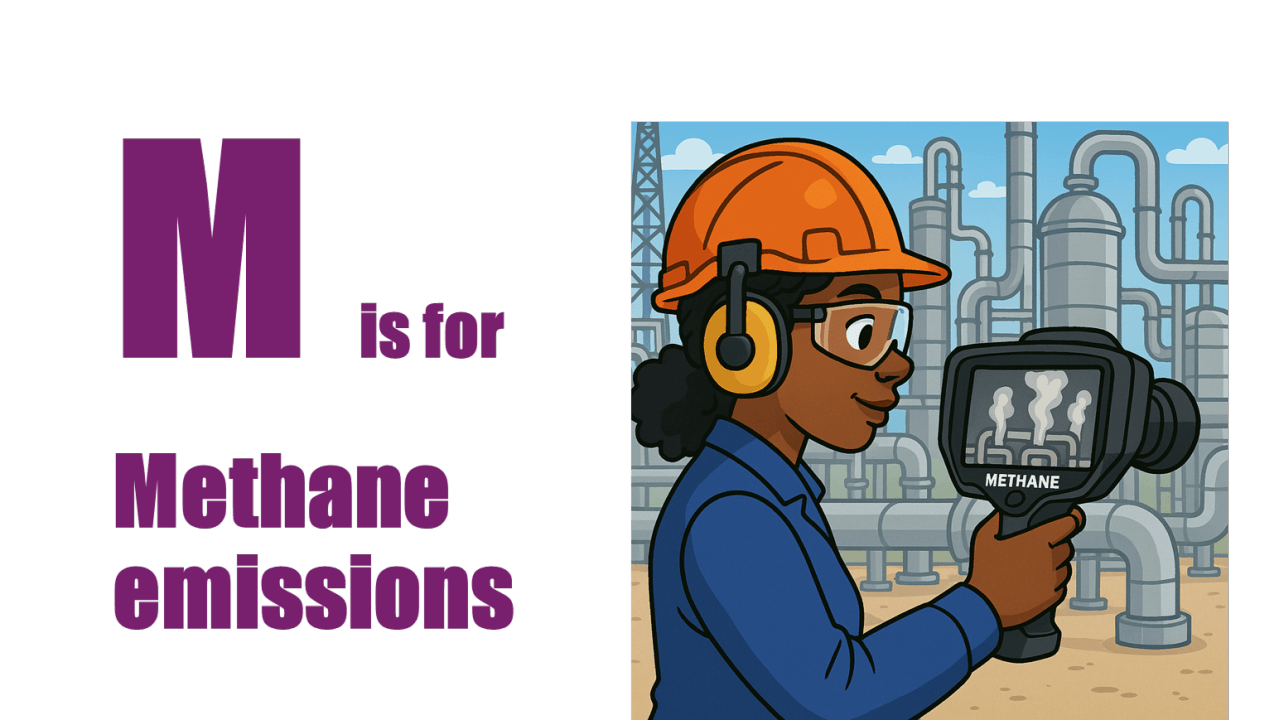
This edition features a special guest writer, Yvette Manolas FEI.

This week's guest writer, Yvette Manolas FEI
Yvette Manolas is an independent consultant, blue chip Executive and globally recognised climate expert with >20 years experience. She has a proven track record in strategic, technical and business roles including leadership of oil and gas businesses with revenue of $3billion/annum. In 2024, she won the WeQual Sustainability Award for global leadership of emissions reduction initiatives across multinational organisations. Previously Yvette has been awarded the 40under40, Energy Game Changer Award, and Telstra Young Business Woman of the Year. Yvette is also a Fellow of the @Energy Institute and is a Non-Executive Director of the CO2CRC Limited. Yvette is an expert in business leadership, navigating strategic opportunities, identifying and managing risk, cultural change, decarbonisation and practical implementation of emissions reduction strategies.
Over to you, Yvette.
Summary
Methane is a greenhouse gas that traps heat in Earth’s atmosphere much more effectively than carbon dioxide (CO₂)-over 80 times more in a 20-year period. Although methane doesn’t stay in the atmosphere as long as CO₂ (about a decade vs up to thousands of years for CO2) its short-term impact on global warming is intense.
The opportunity is significant- eliminating just oil and gas methane emissions would provide the same climate benefit as removing all cars and trucks off the road worldwide. These methane emissions reductions can be achieved today, whilst transitioning the whole transportation sector would take decades to achieve.
Given its high impact and relatively straightforward solutions, methane mitigation presents one of the most effective near-term solutions to limit global climate outcomes and temperature rise. Efforts to reduce methane emissions not only combats climate change but also enhances energy security and safety.
Addressing methane emissions from oil, gas and coal extraction and production requires coordinated effort across industries, governments, and communities. Technologies to detect and repair leaks exist and are effective- the challenge is prioritizing resources (time and money) to enable systemic implementation. Strong leadership and clear and practical regulations will help accelerate progress.
This article is divided into 2 parts;
• Part 1: Taking action and recent developments
• Part 2: Understanding methane
Part 1: Taking Action and Recent Developments
Getting Started on Methane Reduction
Methane measurements are important to accurately identify mitigation activities. As methane sources are equipment and operating condition specific, emissions factors (whilst still widely used) cannot accurately identify leak locations.
Even without precise measurements, initial site based measurements can identify major methane sources and inform screening and prioritisation of abatement activities. Early prioritization helps companies and governments focus on the biggest opportunities for reduction. One common tool used is the Marginal Abatement Cost Curve (MACC), which compares the costs and benefits of different methane reduction measures, expressed in dollars per tonne of CO₂ equivalent.
As a part of this decision making process, measuring and attributing a financial value to methane emissions is crucial, especially considering the high global warming potential of methane. When evaluating mitigation projects, the 20-year GWP (which is 82.5 times that of CO₂) is most relevant for short-term decision making.
Emerging Developments
Recent global discussions highlight that gas security and decarbonisation are not mutually exclusive. Low emissions ‘cleaner’ gas can help to safeguard future gas use, and a secure, low emissions and reliable gas system can be used to complement appropriate transitions to other energy sources.
New regulations and initiatives that are shaping the future of methane management include:
• The European Union (EU) is developing mandatory performance standards for importing natural gas with low methane emissions, aiming to create transparent reporting systems for supply chains. Penalty will be imposed for non-compliance.
• The Japanese Government is building on prior announcements of CLEAN (the Coalition for LNG Emissions Abatement towards Net-Zero) to catalyse the entire LNG supply chain toward low emissions. In support of this, a recent announcement was made for a collaboration between Japan, Canada, MiQ - Methane Intelligence certification, the United Nations International Methane Emissions Observatory (IMEO), Environmental Defense Fund, International Energy Agency (IEA) and the International Group of Liquefied Natural Gas Importers (GIIGNL) to collaborate in the development of a verification mechanism for emissions reduction from the LNG supply chain that leverages existing global standards and protocols.
• Companies and buyers are starting to use methane performance as a criterion in procurement, promoting better practices and encouraging low-emission supply chains. UNEP and MiQ - Methane Intelligence have recently co-released a new draft Protocol for comment that provides a transparent and practical certification option for companies that have achieved OGMP 2.0 L5 performance.
• As a part of countries and companies assessing the emissions intensity of their imported gas via certification systems and standards, there is increasing recognition that the best verification and certification solutions balance accuracy and environmental integrity with practicality, cost minimization, minimal disruption to existing markets, with built in pathways for future improvement. This includes ensuring that accuracy of certification methods is commensurate with implementation costs and complexity.
Part 2: Understanding Methane
A Powerful but Short-Lived Greenhouse Gas
Currently, methane levels are more than 2.5 times higher than pre-industrial times, rising more quickly than all other major greenhouse gases – and at a rate faster than in any period since recordkeeping began. This is mainly due to human activities like fossil fuel extraction, agriculture, and waste, in addition to natural methane emissions from wetlands.
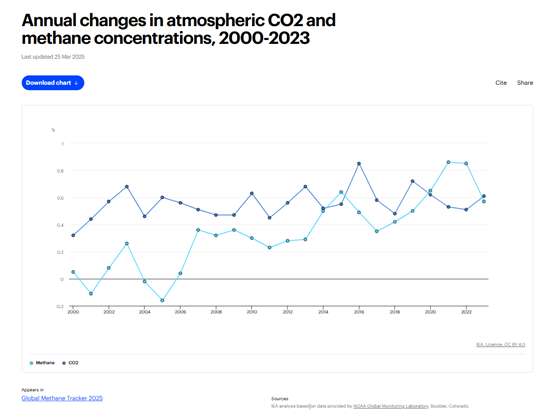
Source: IEA 2025 Global Methane Tracker
Why Is Methane a Climate Priority?
• Methane’s contribution- has contributed to around 30% of the rise in global temperature since the Industrial Revolution. Rapid reductions in methane emissions could significantly slow down near-term warming, helping to meet international climate goals like limiting global temperature rise to well below 2°C. Taking action on methane is one of the quickest and most effective ways to tackle climate change now.
• Methane isn’t just a climate problem— it also affects health. When methane leaks into the atmosphere, it forms ground-level ozone pollution, which causes about a million premature deaths each year globally, harms ecosystems, and reduces crop yields. Methane leaks can also result in explosions, posing process safety and personnel safety risks.
• Methane reductions are cost effective- reducing methane emissions from the energy sector is one of the lowest cost options for cutting emissions compared to other green-house gases. Importantly reducing methane does not necessarily require energy processes to be shutdown (for example reducing CO2 emissions to zero may require an energy plant to be shutdown, whilst reducing methane can actually enhance existing processes).
• Reducing methane leaks also has business benefits- methane is an energy commodity. This means that any captured methane (from avoided leaks) can be directly used as energy source, reduce waste and reduce energy costs.
• Recognizing this, more than 150 countries and organizations signed the Global Methane Pledge in 2021 at COP26. The Pledge aims to cut methane emissions by at least 30% by 2030, compared to 2020 levels.
Where Does Methane Come From?
Methane emissions come from many sources:
• Agriculture: livestock farming (like cattle), rice paddies.
• Energy sector: oil operations, coal mining, natural gas production and transportation.
• Waste: landfills that produce methane as waste decomposes.
Today, fossil fuels are responsible for about a quarter of global warming from methane. There is a wide range of methane emissions performance across different operators, with the worst performers being 100 times worse than the best.
How Much Is Being Lost?
Coal mining is a major source of methane emissions worldwide. During coal extraction, methane trapped within coal seams is released into the atmosphere. This methane is known as fugitive emissions. Whilst coal contributes a smaller absolute volume of global methane compared to oil and gas, its methane emissions are sizeable—around 50-80 billion cubic meters (bcm) annually- and importantly, coal has a higher overall carbon and methane emissions intensity than oil and gas. This means that it produces more total emissions per unit of energy produced.
Leaks and flaring from oil and gas is another major source of methane emissions. Mitigating these leaks could make an extra 100 bcm of natural gas available (if all the gas could be captured), potentially improving energy supply. For context, this would be roughly equivalent to 1200 typically sized LNG cargoes, and puts into perspective just how vast 100 bcm of methane emissions or potential is in terms of shipping volume and emissions mitigation.
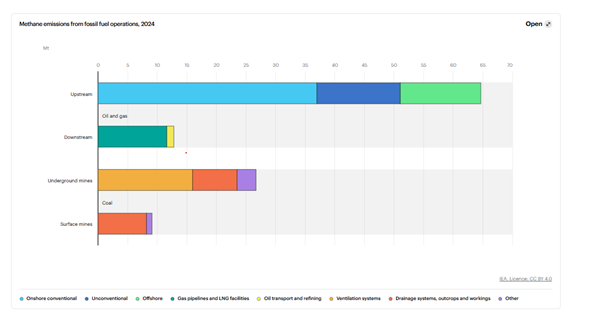
IEA 2025 Global Methane Tracker
Why Reducing Methane Matters Now
If the world is serious about meeting climate targets, we need to cut methane emissions drastically—by around 75% by 2030.
Reducing methane emissions would not only slow warming but also support public expectations; surveys show high levels of global backing (over 80%) for action against methane pollution.
Energy security (having reliable energy sources) is also increasingly important in a world facing population and economic growth. Diversifying energy sources and supply chains will be crucial in the coming decade. Reducing methane emissions can safeguard future gas use to support stable energy supplies where other clean energy sources are not suitable or cost prohibitive to implement.
What Does Good Performance Look Like?
Because methane is so potent, the goal should be to minimize emissions as much as is technologically and economically possible.
Leading companies aim for upstream methane emission levels near zero, with targets below 0.2% of total gas flow, and the best performers targeting 0.05% across their supply chain.
Various organizations and countries have committed to:
• The Global Methane Pledge aims to cut emissions by 30% by 2030.
• The Aiming for Zero initiative seeks near-zero methane emissions from oil and gas operations by 2030
.
• The Oil and Gas Decarbonization Charter (OGDC) involves companies working to reduce emissions.
• The UNEP's Oil & Gas Methane Partnership 2.0 provides transparent reporting and mitigation standards.
• The World Bank No Routine Flaring initiative pledges to eliminate routine gas flaring by 2030.
Is Action Difficult?
Reducing methane emissions isn't technically complex. Detecting leaks can be done with technologies like infrared cameras, drones, satellites, and ground sensors. Once detected, leaks can be quickly fixed with existing solutions.
Focusing on reducing methane can also improve safety, operational reliability, and performance. Assets with lower emissions tend to be safer, more efficient, and better maintained. Engaging workers and adopting a culture of safety and accountability makes this process more effective.
Sources of Methane from Oil & Gas
Most methane emissions in oil and gas operations come from:
• Fugitive emissions: unintentional releases due to leaks from equipment, often due to improper installation and normal wear and tear
• Routine emissions: intentional and expected releases of methane emissions that occur from standard operating practises. This includes large maintenance events, small but frequent process venting, and methane slip from incomplete combustion and flaring
• Non-routine emissions: unexpected, unplanned or abnormal releases of methane emissions due to operational upsets, malfunctions or emergency situations. These events are not part of standard operations and are typically large and episodic in nature.
In the oil sector, over 80% of methane emissions originate from upstream activities— in particular, onshore and offshore production sites. In oil production, flaring (burning excess gas) is common when capturing gas isn't feasible. Properly capturing and using this gas can reduce emissions significantly. Where possible, gas should be either captured for use or flared, not vented directly into the atmosphere.
In the liquefied natural gas (LNG) supply chain, emissions come from:
• Production, processing and transmission (around 80% of the methane emissions footprint, and over 40% of the total Green House Gas -GHG- emissions footprint)
• Shipping (10% of the methane emissions footprint, and almost 20% of the total GHG emissions footprint)
• Liquefaction (almost 10% of the methane emissions footprint, and around 30% of the total GHG emissions footprint)
The amount of methane emitted depends on many factors, including equipment age, operational quality, and management practices.
Sources of Methane from Coal
The most common sources of methane from coal are:
• Fugitive emissions: unintentional releases during excavation and underground mining activities
• Venting: controlled venting of methane during underground mine operations or emissions that are naturally released from coal in open pit mines. This is often one of the largest quantities of coal related methane
• Depressurization and drainage: during which methane is extracted from coal seams (either during or prior to the commencement of mining), drained to the surface, and vented or flared.
• Storage and transportation: during the handling, storage, and transportation of coal and associated gases.
Most methane emissions from coal mining originate during extraction and surface activities, including both underground and open-pit mining. For example, methane trapped within coal seams is released during mining operations. If not properly captured, this methane escapes into the atmosphere, contributing to climate change. Implementing effective methane capture and utilization systems—such as degasification and safe venting—can significantly reduce emissions. Wherever feasible, methane should be captured for use as an energy source, rather than vented.
Thank you so much, Yvette Manolas, for taking the time to write this excellent article. And please keep continue your fantastic leadership in this space in this critical areas going.
Further reading:
• UNEP IMEO: International Methane Emissions Observatory - UNEP - UN Environment Programme
• MiQ - Methane Intelligence : Thought Articles Archive - MiQ
• International Energy Agency (IEA) A: Global Methane Tracker 2025 – Analysis - IEA, and Assessing Emissions from LNG Supply and Abatement Options 2025 Report
• Environmental Defense Fund: Methane pollution from oil and gas
• EU Regulations: https://energy.ec.europa.eu/topics/carbon-management-and-fossil-fuels/methane-emissions_en
And, as always some articles from the Energy Institute New Energy World editor, Will Dalrymple
• Coal industry emits more methane than gas operations
• What is needed to improve methane abatement in upstream oil and gas?
• Methane: Time for our industry to accelerate action (comment from Bjørn Otto Sverdrup, Chair OGCI (Oil and Gas Climate Initiative) I
• Reducing flaring: six oil companies around the world show how it’s done
• Monitoring and measuring methane
• All that emits is not CO2: tracking methane emissions by satellite
To mark the launch of the Energy Institute Statistical Review of World Energy, all feature articles in New Energy World are free to access until the end of July. If you like what you see, consider becoming a member of the Energy Institute for year-round access to exclusive content.
