
The A to Z of the Energy Transition: A is for Air Source Heat Pump
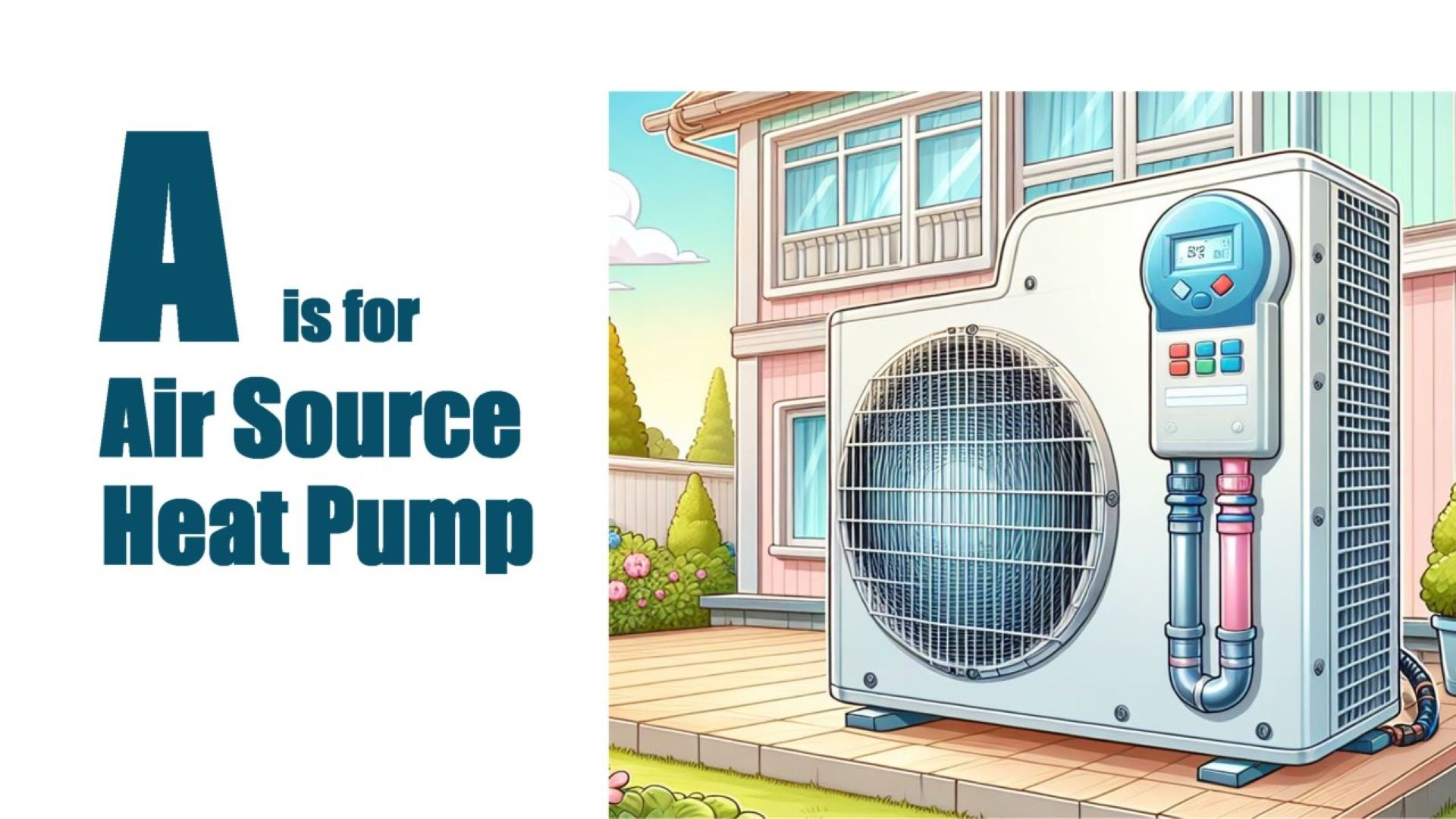
(and other forms of heat pump)
It’s the first edition of the A to Z of energy transition! I’ll be posting these every two weeks across 2025.
First a disclaimer: Any views expressed are mine and not those of the Energy Institute. These posts are intended as a light ‘101’ summary of key technologies and drivers of the energy transition, to share insight and knowledge and hopefully create some friendly debate. Many of my network will know far more than I do, so please do chip in with any additional helpful points. And let’s keep this friendly!
So…. A is for Air Source Heat pump. Sorry, I’ve allocated ‘H’ for something else which probably doesn’t take too much guessing…
Heat pumps are about the closest thing to magic in energy. They transfer heat from the environment to a refrigerant (a fluid which can undergo repeated phase change from liquid to gas), compress the refrigerant (changing it from liquid to gas), which generates heat that is then transferred to another fluid (typically water or air) so it can be used to heat homes, buildings and industrial processes. Even if the source of the heat is relatively cold, so long as it’s above absolute zero (-273°C) it still holds heat energy. Think about pumping a bike tyre/tire on a cold day, the pump will soon get hot.
The ‘magic’ is that the heat output is typically a multiple of 3-4, or even higher, than the electrical energy required to drive the compressor. For example, a domestic air source heat pump might create 3 or 4 kWh of heating energy output from just 1 kWh of electrical energy input. The ratio between output and input is labelled Coefficient of Performance (COP). The Energy Savings Trust have this helpful explanation here: In-depth guide to heat pumps - Energy Saving Trust
This is the first key factor why heat pumps are so critical to decarbonising heat. A well serviced, modern gas boiler typically converts over 90% of its input energy to heat, which is impressive, but a heat pump at 300 – 400% efficiency can dramatically reduce energy consumption.
The second key factor is that electricity is far easier and cheaper to decarbonise than the most common fuel for UK heating, natural gas. According to the Energy Institute Statistical Review of World Energy, the UK generated over 60% of its electricity from low-carbon sources (including nuclear) in 2023 and France over 90%. And due to the efficiency of a heat pump, even a heat pump on a predominantly gas-powered grid uses less gas and produces fewer emissions that a gas boiler.
There are four main types of heat pump:
• Air source (ASHP): transfers heat from ambient outside air to a refrigerant, which heats water for heating radiators, underfloor heating and of course hot water. ASHPs are suitable as a replacement for gas boilers for most homes in locations such as Northern Europe, with some level of potential changes to radiator sizes and insulation.
• Ground source (GSHP): transfers heat from underground via bore holes or ‘slinky’ arrays to a refrigerant which also warms water. They typically achieve higher COPs than ASHPs. However, they require higher capital investment and the need for a large unobstructed area to install slinkies or to drill relatively deep bore holes, so their use case is best suited to district heating schemes, industrial sites and new-build properties with lots of garden space.
• Air-to-air: transfers heat from ambient outside air and circulates warm air inside – the same technology as ASHPs but heating air rather than water. These are effectively air conditioning units working in reverse, and as such, often suited to smaller properties and flats (think of the split units you see on balconies in parts of Europe, the US and Asia). The big benefit of the technology is that it can both heat and cool, something increasingly attractive to consumers as climate change increases the frequency of heatwaves.
• Water source: transfers heat from a river, sea water, or even wastewater, to create either district heating or industrial heating solutions. There’s a great example here of a district heating system in Glasgow DISTRICT HEATING - Queens Quay
Beyond buildings, heat pumps are becoming increasingly prevalent in industrial heating. Just under 40% of industrial process heat demand is below 200°C, something that is expected to be well in range of industrial heat pumps by 2030. (You can read about further forms of electrical industrial heating in this paper from Energy Institute Fellow Jan Rosenow: Some like it hot: Moving industrial electrification from potential to practice
So, if air source heat pumps (and other forms of heat pumps) are the ‘magic’ solution to decarbonising heat, why aren’t they rolling off the shelves much faster? The following are a few of the reasons:
• Upfront capital costs – despite costs continuing to fall, installation and improvements to buildings (such as changes in pipework and radiators), mean the upfront cost of a heat pump is still more than a gas boiler. Government grants are helping to narrow this gap but whilst operating costs should be lower, this is not always the case (see the third point below).
• Skilled workforce and supply chains – although heat pumps are well established in some countries (e.g. Scandinavia), they are at an early stage in the UK and we have yet to create an industry and workforce to install at the rates we need to meet decarbonisation targets.
• High electricity prices – whilst a well installed heat pump is far more efficient that a gas boiler in nearly all use cases, a kWh of electricity in the UK is currently around three to four times the equivalent unit of natural gas. Take up of heat pumps has typically been much higher in countries where this spread is much lower.
That said, the following report from the Energy Systems Catapult outlines some further challenges, but with the positive news that 85% of users in a recent trial would recommend a heat pump to friends and family. Heat pumps recommended by 85% of consumers
And Nesta, a UK charity focused on innovation for social good, have done some further work on how we could accelerate deployment of heat pumps: How to install more heat pumps: insights from a survey of heating engineers - Nesta
That’s it for A. I would love to hear other perspectives and maybe any important ‘A’s you might have chosen instead.
Next time it will be B for….
Online Resource details
Websites:
LinkedIn Post
Keywords: A-Z energy transition
Subjects: Air source heat pumps, Ground source heat pumps, District heating, Heat
