


New Energy World™
New Energy World™ embraces the whole energy industry as it connects and converges to address the decarbonisation challenge. It covers progress being made across the industry, from the dynamics under way to reduce emissions in oil and gas, through improvements to the efficiency of energy conversion and use, to cutting-edge initiatives in renewable and low-carbon technologies.
Peak uncertainty – what the current debate about peak oil demand says about the energy transition
7/8/2024
10 min read
Feature

Several recent reports suggest that global oil demand either has peaked, or will peak, before 2030. On the other hand, oil supplier group OPEC+ vigorously rebuts these forecasts. Despite radically diverging visions, both sides do seem to agree about the fields of the coming battle: in emerging economies and between addition versus substitution. New Energy World Senior Editor Will Dalrymple investigates.
Two major reports published in June and July 2024 predict global oil demand to peak by the 2030s.
A near-term peak in oil demand and declining trend afterward is again displayed in the scenarios included in the 2024 BP Energy Outlook. That message is little changed since 2022. What is new this year is a slight uptick in demand forecast for the next year or two, from just under, to just over, 100mn b/d – a movement accentuated in a new graph from the International Energy Agency (IEA), Fig 1, that has been compressed horizontally compared to previous years.
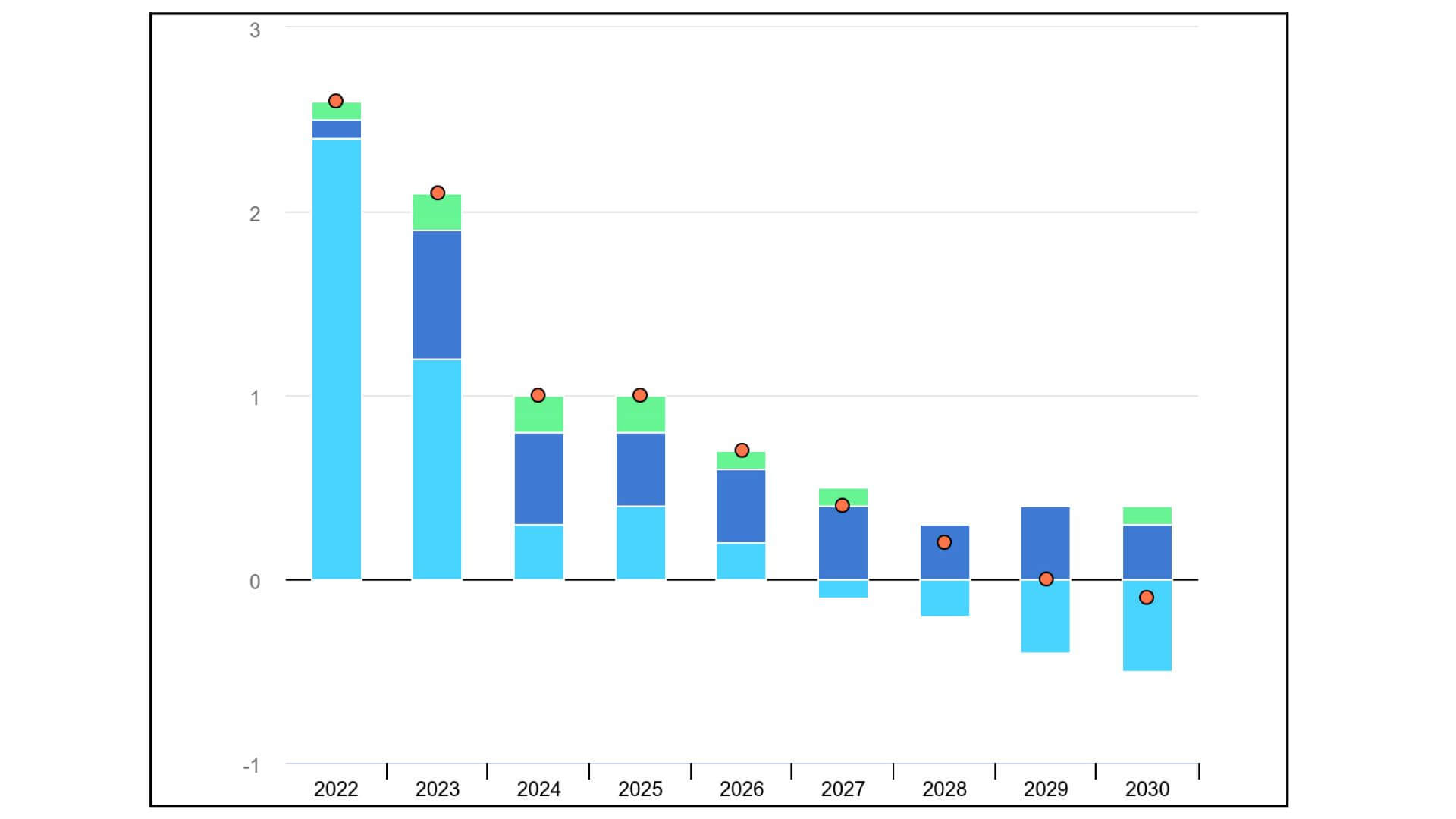 Fig 1: The International Energy Agency’s new report predicts oil demand growth to diminish to zero by 2030
Source: IEA 2024; Oil 2024, License: CC BY 4.0
Also changed are the scenarios out to 2050; what were three, ‘New Momentum’, ‘Accelerated’ and ‘Net Zero’ have in the latest report become ‘Current Trajectory’, which more or less maps current behaviour, and a more aggressive ‘Net Zero’ scenario.
In the 2024 Current Trajectory scenario oil demand levels off at about 100mn b/d, and from 2035 starts to decline gradually to reach 75mn b/d by 2050. Unabated fossil fuels (including coal and gas) still make up two-thirds of energy by that period in the current trajectory.
The Net Zero scenario’s oil demand decline is far steeper, to 25–30mn b/d by 2050, at which point the percentage of unabated fossil fuels is only 15%.
But in either case, oil continues to play a major role in the energy system for the next decade, ranging from 80–100mn b/d by 2035.
According to BP, the single biggest cause of the fall in oil is decreased demand from road transport. Initially that drop comes from improved efficiency; later, it is because of the rise in electric vehicles (EVs). The number of EVs forecast to be driving around ranges between 1.25–2 billion in 2050 in the two scenarios. Oil demand for transport is 40mn b/d today, but drops to 5–25mn b/d by 2050 in the two scenarios.
Meanwhile, the IEA's Oil 2024 report predicts oil demand growth to fall to almost zero from over 2mn b/d in 2023, to level off at 106mn b/d toward the end of the decade, slightly above 2023 levels.
In a response to questions, an IEA analyst states that oil demand growth has slowed sharply after the post-pandemic rebound. He says: ‘Our projections show this slow increase becoming a plateau by 2030 because of the growing impact of clean energy technologies like electric vehicles and Saudi Arabia’s push to cut oil use in power generation.’
Other factors holding back oil growth according to the forecast have to do with the energy transition: investment in other technologies, changes in regulations and new government policies.
The analyst adds: ‘This observed slowdown is consistent with the estimates in previous editions of our medium-term outlook, but this is the first time the forecast horizon has extended far enough to show a clear plateau in consumption.’
The report also points out that, based on known project investments, growth in world oil supply is expected to surpass demand from 2025 onwards, resulting in a continuing increase in spare production capacity and leaving stranded assets.
Contrary view
Responding to the IEA report specifically, OPEC Secretary General Haitham Al Ghais wrote a strongly-worded rebuttal published on 13 June in EA (Energy Aspects) Forum. He said: ‘This is an unrealistic scenario, one that would negatively impact economies across the world. It is simply a continuation of the IEA’s anti-oil narrative. Given the real trends we see today, we do not see peak oil demand by the end of the decade.’
He also reported that OPEC forecasts oil demand growth of 4mn b/d in 2024 and 2025, and no peak even by 2045, at which its expectation is 116mn b/d (or higher).
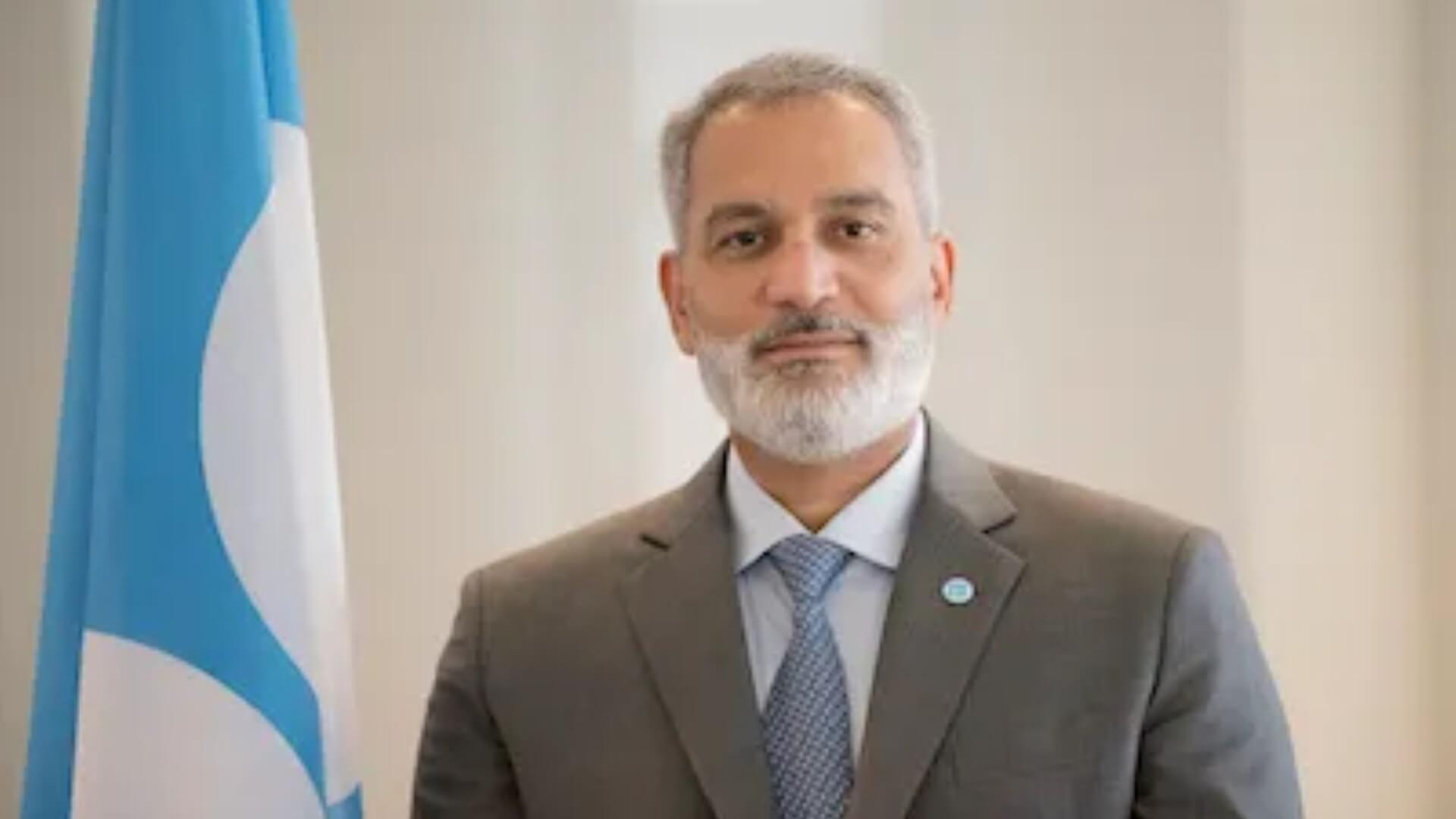
Haitham Al Ghais, Secretary-General of OPEC, recently commented: ‘Given the real trends we see today, we do not see peak oil demand by the end of the decade.’
Photo: OPEC
Supporting those numbers, OPEC’s Annual Statistical Bulletin, which was published after Al Ghais’ comment, reports that oil demand grew by 2.56mn b/d in 2023 to exceed pre-pandemic averages and reach an average of 102.2mn b/d.
In his EA Forum statement, Al Ghais observed that predictions of peak oil date back a generation or more, to the 1990s. ‘Decades later, however, it has still not come to pass, as enhanced economics and constant improvement in technology have helped lower costs and open up new frontiers to expand the resource base.’
Moreover, he goes on to criticise these predictions, seemingly because of their potentially destructive effect on confidence in the oil and gas industry. ‘It is a dangerous commentary, especially for consumers, and will only lead to energy volatility on a potentially unprecedented scale,’ Al Ghais said.
Non-OECD growth
One point of commonality between all of the reports is that demand growth is shifting east, away from OECD countries and toward developing countries.
For example, the IEA predicts that oil demand in advanced economies will fall from 45.7mn b/d to 42.7mn b/d between 2023–2030. Set against that is big growth in demand from emerging economies, particularly China and India. In the former, demand comes from the petrochemical sector, and not transport (where demand is affected by investment in clean energy technologies and high-speed rail). But in the latter, demand for transport fuels is forecast to grow.
The IEA predicts that demand from emerging and developing economies will have grown by 2.5 times from 2023 to 2030. Non-OECD countries will account for all of the growth in oil demand in 2024, which is expected to be slightly less than 1mn b/d, and similar in 2025.

Fatih Birol, Executive Director of the International Energy Agency, which says that growth in world oil supply is expected to surpass demand from 2025 onwards
Photo: IEA
Similar trends are observed in OPEC’s own statistics, where in 2023 OECD Europe demand fell compared to 2022, to 13.4mn b/d; OECD Asia dropped to 7.2mn b/d; and North America rose less than 1% to 25mn b/d. By contrast, China grew by 8.7% to 16.3mn b/d, India by 4% to 5.3mn b/d, ‘other [Southeast] Asia’ to 9.3mn b/d and Latin America up to 6.7mn b/d.
In his comments, Al Ghais also stressed that energy and oil demand growth primarily lies in the non-OECD developing world, where there are increasing populations, expanding middle classes and growing economies. He predicts that oil demand is forecast to rise in those regions by over 25mn b/d to 2045. China and India are expected to contribute more than 10mn b/d just themselves.
Al Ghais says: ‘We should also remember that billions of people in the developing world still lack access to modern energy services. For these people, their energy future is not about net zero, deciding on the purchase of an electric vehicle, or ruminating over the costs and benefits of energy sources. Instead, it is about achieving the energy basics that the developed world takes for granted, such as being able to turn on a light, cook on a clean stove or have motorised transport to move to and from work or school.’
While not denying the energy needs of the developing world, BP Chief Economist Spencer Dale, who presented the BP 2024 Energy Outlook, pointed out that patterns of consumption change during that development. He stated that while population growth has some effect on energy demand (of all types, not just oil), the bigger effect – amounting to 70% of demand – is caused by increased prosperity. Over time, their purchasing behaviour, which becomes more sophisticated as people become more wealthy, changes the marketplace.
During his presentation, he also explored the BP Outlook’s forecast for gas in developing economies. Unlike the other fossil fuels forecast to fall, in the Current Trajectory scenario gas is expected to rise by 25% by 2050. The Net Zero scenario also predicts a near-term rise, followed by a decline to half the current level in 2050.
Explaining those trends, Dale said that two competing forces are in play. The first is the use of gas in developing economies, whose economic growth drives increases in the Current Trajectory scenario. But in the Net Zero case, the use of gas is crowded out by wind and solar renewables, as those countries electrify their energy systems.
The comments of the OPEC Secretary General, by contrast, emphasise the societal benefits of oil in democratising access to energy – particularly in those countries where energy demand continues to rise.
He said: ‘The clear need [is] to prioritise energy security, utilise all available energies, deliver energy affordability, enhance sustainability, reduce emissions and not limit our energy options in the face of expanding demand’.
Al Ghais went on to state that oil delivers on all of these, that its versatility ensures that it will continue to be useful (and continue to grow), and therefore that investments in oil and gas need to continue.
He concluded: ‘Those that dismiss this reality are sowing the seeds for future energy shortfalls and increased volatility, and opening the door to a world where the gap between the “energy haves” and “energy have nots” grows even further.’
Addition versus contraction
In his June comment, OPEC Secretary General Haitham Al Ghais welcomed the progress made on growing renewables and EVs. But he pointed out that despite its historic growth, renewables do not exceed about 20% of the global energy mix, and suggested that the goal of many proponents of renewables to do away with oil and gas is unrealistic. He said: ‘Rather than adding new energy sources to the mix, the focus is on substituting energy sources, which flies in the face of the history of supplying energy to the world.’
Unexpectedly, the same view was expressed by BP Chief Economist Spencer Dale one month later at the launch of the BP Outlook in mid-July. In reviewing the development of energy in recent times, he noted that recent growth in renewables has not been able to keep pace with rising energy demand. As a result, unabated fossil consumption continues to increase as well. This period, he summarised, is a phase of energy addition, in which both old and new energy types are growing.
He went on to point out some historical parallels. In the mid-19th century, coal replaced biomass and wood. A century later, oil overtook coal. In both periods, consumption of the first commodity continued to grow as the second was adopted. In the end, people consumed more of everything.
But then Dale pivoted and concluded that, to meet net zero targets, the world needs to move from an ‘energy addition phase’ to an ‘energy substitution phase’, where the addition of low-carbon energy and unabated energy drops exceeds the increase in demand.
That conclusion also chimes with the comments made by the IEA analyst, who says that even though oil demand growth is slowing, the world is not on track with the IEA’s Net Zero Emissions scenario. For oil demand to decline sooner and to align with the IEA’s Net Zero Emissions roadmap, additional policy measures and behavioural changes are required.
- Further reading: ‘Decarbonising oil and gas operations’. Mitigating and reducing greenhouse gas emissions from oil and gas operations is a must if the world is to maintain its steady course towards net zero.
- Canada’s oil sands present a paradox between economic growth and environmental stewardship. As some of the world’s largest reserves of heavy crude oil, they are integral to meeting global energy demands. However, their environmental impact, characterised by significant greenhouse gas emissions and extensive landscape disruption, has sparked international concern and domestic debate.
